20 Lace Knitting Patterns (Delicate & Beautiful)
There is something almost magical about lace knitting. A single strand of yarn, guided by two needles and a handful of strategic yarn-overs, transforms into something that looks impossibly intricate — gossamer fabric full of holes that somehow creates beauty rather than incompleteness. If you have ever held a finished lace shawl up to the light and watched the pattern dance through the openwork, you already understand the particular joy of this craft.
Whether you are a beginner who has just mastered the yarn-over and is looking for your first delicate project, or an experienced knitter ready to tackle complex charts with multiple repeats and nuanced shaping, lace knitting has something for you. The twenty patterns collected here run the full spectrum from approachable to ambitious. Each one has its own character, its own rhythm, and its own moment when the fabric suddenly clicks into something breathtaking.
Before diving into the list, a few quick notes. Blocking is not optional with lace — it is the step that opens up the pattern and makes every stitch legible. A finished lace piece fresh off the needles looks like a crumpled disappointment; the same piece after wet blocking and pinning is a revelation. Also, lifelines are your best friends. Thread a strand of smooth waste yarn through your live stitches every ten rows or so, and if you drop a stitch or lose your place in the chart, you have a safe row to rip back to. With those two principles in hand, let’s explore twenty patterns worth casting on.
1. Classic Feather and Fan Shawl
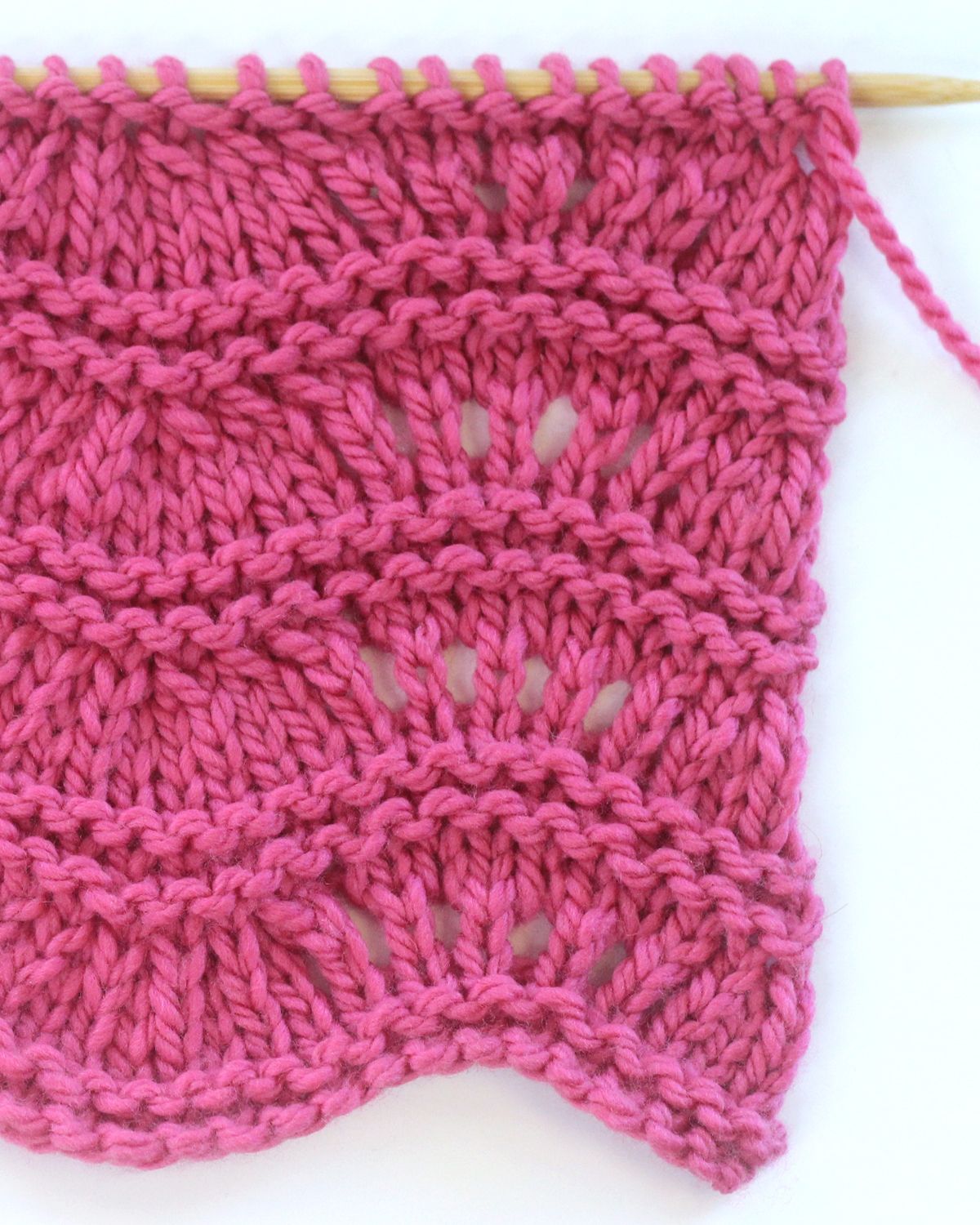
Feather and fan — sometimes called Old Shale — is arguably the most recognizable lace stitch pattern in Western knitting. It combines yarn-overs with pairs of decreases to create a gently rippled fabric that looks complicated but works on a four-row repeat you can memorize in about ten minutes. A crescent-shaped shawl in feather and fan is the ideal first lace project because the rhythm becomes so natural that you barely need to look at your work. Choose a fingering-weight yarn in a semi-solid color to let the wave structure show clearly. The shawl grows quickly and the result — a sweeping crescent with a scalloped edge — looks far more advanced than the skill level required.
2. Shetland Heirloom Christening Shawl
At the opposite end of the difficulty spectrum sits the traditional Shetland heirloom shawl, a project that has been passed down through generations in the Scottish islands. These shawls are worked in ultra-fine laceweight yarn — often a 2-ply jumper weight — and feature a large central medallion bordered by increasingly complex panels, all finished with a delicate traditional border attached as you go. The openwork is so fine that a finished shawl can be drawn through a wedding ring. This is a commitment project, sometimes spanning months, but the result is a true heirloom. If you want to attempt it, look for patterns that include charts for the center, the fill panels, and the border separately, which makes the project far more manageable.
3. Simple Leaf Lace Scarf
Leaf motifs are a perennial favorite in lace knitting because they echo a natural form that almost everyone finds pleasing. A leaf lace scarf is an ideal intermediate project: the leaf repeat is just wide enough to be interesting, and the logic of how yarn-overs and decreases form the leaf’s midrib and outer edges teaches you a great deal about how lace actually works. Worked in a silk-merino fingering blend, a leaf lace scarf drapes beautifully and catches the light in a way that plain stockinette never could. Look for a pattern with an eight-to-twelve stitch leaf repeat and a simple two-row border that keeps the edges tidy.
4. Flower Basket Shawl
The Flower Basket Shawl, originally designed by Evelyn Clark, became a modern lace classic almost immediately after it was published. It features a distinctive central design of stylized flowers arranged in a triangular shawl format, with each flower formed by a cluster of yarn-overs radiating from a central decrease. The pattern is written in clear text rows rather than charts, which many knitters prefer, and it uses a heavier laceweight that knits up relatively quickly. This is a great next-step project after a feather-and-fan shawl because it introduces more deliberate stitch placement without overwhelming complexity.
5. Estonian Lace Nupps
Estonian lace is a world of its own, and the defining feature is the nupp — a cluster of five, seven, or nine stitches worked into a single stitch and then purled together on the return row, creating a small raised bobble that adds three-dimensional texture to an otherwise flat lace fabric. Patterns from Estonia, particularly those associated with Haapsalu, are among the finest in the world. A Haapsalu-style shawlette worked in cobweb-weight yarn with nupp accents is a stunning project for an adventurous knitter. The nupps themselves require practice and a certain looseness in your yarn-overs to make them manageable, but once you get the feel for them, they become deeply satisfying.
6. Hexagonal Lace Doily
Doilies fell out of fashion for a while, but they have made a strong comeback as decorative objects and as practice pieces for learning lace construction. A hexagonal doily worked from the center outward teaches you how to manage increases at regular intervals, how to read circular charts, and how to work increasingly complex repeats as your circumference grows. The finished piece can be framed as wall art, used as a table topper, or blocked over a padded form to create a bowl. Choose a cotton or cotton-blend laceweight yarn, which gives doilies a crisp, architectural quality that wool can’t quite match.
7. Wingspan Shawl
The Wingspan pattern by Andrea Jurgrau is one of the great modern lace designs, and its clever construction makes it unlike anything else in lace knitting. The shawl is built from a series of diagonal wedges that fan out across the wingspan, creating a shape that wraps beautifully around the shoulders. The lace in Wingspan is restrained rather than elaborate — short rows and simple eyelets do most of the work — which lets the construction itself become the design feature. This is a fantastic project for knitters who love clever structure and want something visually impressive without dense charted lace.
8. Cobblestone Lace Mittens
Lace isn’t only for shawls and scarves. Lace mittens, often featuring allover eyelet patterns or delicate panel inserts on the back of the hand, are both functional and beautiful. A pair of mittens with a diamond-lattice lace panel on the back is a satisfying quick project — you have two objects to knit, which means you get to practice the pattern twice and usually nail the second mitten far more cleanly than the first. Use a sock-weight yarn for durability, or a fingering merino for something softer and more luxurious.
9. Horseshoe Lace Panel Hat
The horseshoe lace stitch is one of the most elegant classic patterns: a series of yarn-overs arching over central decreases creates a repeating horseshoe or arch motif that tiles beautifully around a hat. Because it works on a ten-stitch repeat and is only eight rows tall, horseshoe lace is very learnable and very satisfying to knit. A hat featuring a band of horseshoe lace above a simple ribbed brim and topped with a plain stockinette crown is a beginner-friendly introduction to working lace in the round. The pattern looks extremely refined and makes a wonderful gift.
10. Orenburg Gossamer Shawl
Russian Orenburg lace is one of the most technically demanding lace traditions in the world. Orenburg shawls are worked in a local yarn spun from the fleece of a specific goat breed — incredibly fine, incredibly warm — and the patterns are based on geometric grid layouts filled with intricate small motifs. Authentic Orenburg shawls are worked so finely that they achieve the same draw-through-a-ring quality as Shetland work, despite looking completely different. For a Western knitter, there are Orenburg-inspired patterns that use finer commercially available laceweight yarn. These shawls are advanced projects, but they are among the most rewarding pieces you can make.
11. Print o’ the Wave Stole
Inspired by Japanese woodblock prints of ocean waves, the Print o’ the Wave stole by Eunny Jang is a design that the knitting world fell in love with when it appeared in Interweave Knits. The stole features undulating wave panels separated by simple columns, and the interplay between the flowing curves and the structured dividers gives the fabric a sense of motion even when it is lying flat. The pattern is chart-heavy and requires consistent attention, but it is worked flat on straight needles, which many knitters find more manageable than complex circular work. In a sea-glass or slate-blue colorway, it is breathtaking.
12. Faroese Shawl
The Faroese shawl has a distinctive silhouette: two side panels, a back panel, and a gusset that creates a shaped back yoke, allowing the shawl to sit squarely on the shoulders without sliding off. The Faroe Islands have a rich tradition of working lace into these shaped shawls, and the combination of practical construction with intricate patterning is a hallmark of the style. A Faroese shawl is a good intermediate-to-advanced project because you are managing not just a lace pattern but also a shaped construction. The fit reward is worth it — a Faroese shawl stays put in a way that a flat crescent or triangle never quite does.
13. Traveling Vine Socks
Traveling vine is a classic lace pattern in which a simple vine motif, created through a combination of yarn-overs and paired left-and-right-leaning decreases, appears to climb up a panel. On a sock, the vine typically runs up the front of the leg, framing the instep, while the heel and sole are worked in plain stockinette for durability. Traveling vine socks are a well-loved intermediate sock pattern, partly because the stitch count is manageable and partly because the result looks so much more sophisticated than plain socks. In a hand-dyed semi-solid, the vine motif really pops.
14. Cathedral Windows Shawl
The cathedral windows stitch, also known as church windows, creates a pattern of elongated arches stacked vertically, which genuinely does evoke the soaring lancet windows of Gothic architecture. A shawl worked entirely in this stitch has an almost architectural drama to it — particularly when worked in a deep jewel tone like burgundy or midnight navy. The stitch itself is based on a twelve-row repeat that, like feather and fan, becomes rhythmic and memorizable after a few full repeats. It is a beautiful project for an intermediate knitter looking for something more visually striking than a standard eyelet pattern.
15. Icelandic Lace Yoke Sweater
Not every lace project is a shawl. An Icelandic-inspired yoke sweater with a lace yoke is a stunning garment project that combines the structure of a traditional colorwork sweater with delicate openwork. The yoke is worked in a circular lace pattern that fans outward from the neck, and the body and sleeves are usually worked in plain stockinette so that the lace yoke reads as the centerpiece. This is an advanced project — you are managing a sweater’s worth of fit and construction alongside charted lace — but the result is genuinely wearable art.
16. Beekeeper’s Quilt-Style Lace Hexagons
The beekeeper’s quilt famously uses tiny stuffed hexipuffs to create a quilt from sock yarn scraps. A lace version takes the same concept in a different direction: flat lace hexagons, each worked from the center outward in a different lace pattern, joined together into a lightweight throw or lap blanket. Each hexagon takes roughly an hour or two to complete, which makes the project highly portable and ideal for knitters who like to take their work on the road. The joining can be done with a simple crochet slip-stitch join or a sewn whipstitch. The finished blanket has an eclectic, collected quality that makes it look like a textile sampler.
17. Pi Shawl
Elizabeth Zimmermann’s Pi shawl is one of the masterworks of modern knitting design, not because of its stitch pattern but because of its construction logic. The shawl is worked in the round from the center outward, and the rate of increase is based on the mathematical relationship of pi: you double your increases at intervals that also double in length, which means the shawl grows at a rate that keeps the fabric perfectly flat without the need for complex shaping. This construction framework is entirely open — you fill in your own choice of lace patterns between the increase rounds. Many knitters treat their first Pi shawl as a sampler, working a different lace stitch in each section.
18. Hawthorn Lace Border Blanket
A baby blanket edged with a delicate hawthorn lace border is one of the most enduring gift projects in knitting. The center of the blanket is typically worked in a simple textured stitch — seed stitch, moss stitch, or a simple allover eyelet grid — and then bordered with a more complex lace edging applied either as a picked-up border knitted outward or as a separate strip sewn on after blocking. The hawthorn border, with its small leaf and berry motifs, gives an otherwise simple blanket a botanical elegance that elevates it from functional to treasured. In a pale fingering-weight merino, it is exactly the kind of thing people keep for decades.
19. Tunisian Crochet-Influenced Mesh Lace Top
At the looser, more open end of the lace spectrum sits mesh lace — fabric made almost entirely of yarn-overs and decreases, creating a net-like structure with very little solid fabric between the openings. A fitted or flowy summer top worked in mesh lace from a cotton or bamboo yarn is airy, lightweight, and visually striking. This style of lace knitting is more approachable than it looks because the openwork structure makes it easy to see exactly where you are in the pattern at any given moment. A simple shell or tank worked in a diagonal mesh pattern is a satisfying warm-weather project.
20. Vintage Teneriffe Lace Medallion
Teneriffe lace, originally a needle-made lace from the Canary Islands, has been adapted into knitting as a series of medallion forms worked from the center outward, featuring radiating spokes of yarn-overs that create a sunburst or snowflake effect. A collection of small Teneriffe-inspired knitted medallions can be joined into a table runner, used as ornaments, or assembled into a statement wall hanging. Each medallion takes only a small amount of yarn and relatively little time, making this a wonderful stash-busting project. The resulting pieces have a graphic, almost modern quality that suits contemporary interiors beautifully.
Tips for Getting the Most From Your Lace Projects
Choosing the right yarn matters more in lace than in almost any other type of knitting. Smooth, plied yarns show stitch definition most clearly and are far easier to rip back when you make an error. Single-ply yarns can be more fragile and are harder to unknit without losing stitches. Natural fibers — wool, silk, alpaca, cotton — block beautifully because they accept moisture and hold their shape after drying. Superwash wools and plant fibers work well but may relax or grow more than you expect, so always swatch and block your swatch before casting on a large project.
Needle choice matters too. Many lace knitters prefer metal or nickel-plated needles for slippery fingering yarns because the yarn moves freely, reducing fatigue during long sessions with complex patterns. Others prefer wood or bamboo tips for the grip they provide, particularly when working very fine cobweb or laceweight yarn that tends to fall off metal tips uninvited.
Lighting is underrated. Complex lace charts are much easier to follow when you can see clearly, and a daylight lamp positioned over your work can make the difference between catching a misplaced yarn-over and discovering it six rows later when the error has propagated into a visible distortion.
Most importantly, be patient with yourself. Lace knitting has a learning curve, and even experienced lace knitters occasionally put a project down for a few days when a pattern is fighting back. The craft rewards persistence. Every piece you finish teaches you something that makes the next one smoother, more confident, and more beautiful.
Lace knitting sits at the intersection of mathematics and art. The holes are not mistakes — they are the design. The yarn is not merely a medium but a collaborator. Whether you cast on your first feather-and-fan shawl this weekend or settle in for a months-long Shetland heirloom project