



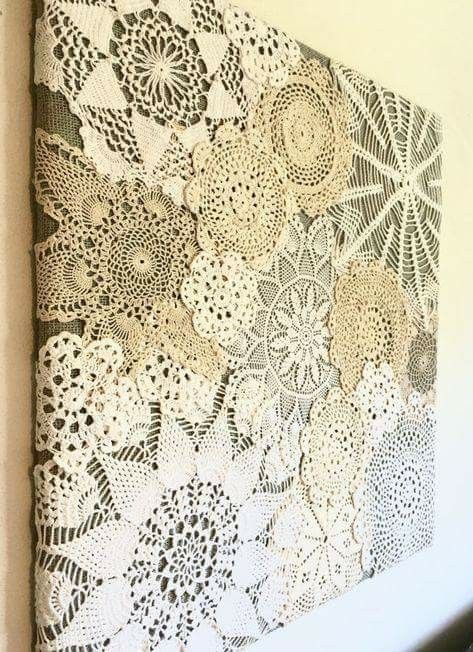
Old Things in a New Way: Modern Decor with Lace
There is something quietly radical about taking a material associated with your grandmother’s dining room and placing it at the center of a contemporary interior. Lace has always occupied an interesting cultural position — delicate, painstaking, historical — but what is happening in home decor right now suggests that its story is far from over. Designers and homeowners alike are rediscovering lace not as a relic but as a resource, one whose intricate patterns and soft textures have surprising things to offer modern spaces. If you have been scrolling through interior design accounts lately and noticed something that looks almost vintage but somehow feels completely fresh, there is a good chance lace was involved.
This is the art of bringing old things into the world in a new way, and it is one of the most interesting creative conversations happening in home design right now.
Why Lace Is Having a Moment
To understand why lace works so well in modern interiors, it helps to think about what contemporary design actually craves. After a decade of minimalism that prioritized smooth surfaces, neutral palettes, and an almost clinical sense of order, many people are hungry for something that feels more human. Not cluttered, not overwhelming — but warm, layered, and made with intention.
Lace offers exactly that. It carries within its structure a kind of visible effort. Every loop, every intersection of thread, speaks to the work of human hands. Whether the lace in question is genuinely antique, a quality reproduction, or a laser-cut modern interpretation, it brings a sense of craft and time into a room. That quality is increasingly rare, and because it is rare, it is increasingly valued.
There is also something about lace’s visual behavior that makes it particularly suited to modern spaces. It plays with light rather than blocking it. It creates pattern without weight. It defines space without closing it off. In an age when open-plan living has made many homes feel somewhat undifferentiated, lace offers a way to draw visual boundaries and add interest without sacrificing that sense of openness.
And then there is the simple fact of texture. Modern decor has grown increasingly attuned to the way materials feel as much as the way they look. Lace sits in a fascinating place on the texture spectrum — it is simultaneously airy and intricate, simultaneously soft and structured. Running a hand along a piece of vintage bobbin lace or even a well-made contemporary lace fabric is an experience that smooth, mass-produced surfaces simply cannot replicate.
Understanding the Different Kinds of Lace
Not all lace is the same, and knowing the distinctions helps enormously when you are trying to use it in a modern context. Antique and vintage lace comes in many forms — needle lace, bobbin lace, tatting, crochet lace, and machine-made lace from various eras. Each has a distinct character.
Needle lace, made entirely with a needle and thread, tends to be extremely fine and detailed, often featuring floral or figural motifs. It is the kind of lace you find framed in textile museums, and it can absolutely be displayed in the home in exactly that way — mounted under glass and hung as a piece of art in its own right.
Bobbin lace, made by weaving and twisting threads around a series of pins, tends to have a more open, geometric quality that often feels more compatible with modern aesthetics. Its patterns can range from relatively simple grids to extraordinarily complex designs, and its weight and drape make it suitable for curtains, table runners, or decorative throws.
Crochet lace, technically a cousin to traditional lace rather than lace itself, has its own devoted following in the interior design world. The larger scale of crochet work — those big, looping, honeycomb-like patterns — translates beautifully into blankets, pillow covers, hammocks, and wall hangings. Its bohemian warmth pairs unexpectedly well with very clean, minimal interiors.
Contemporary lace is another category entirely. Laser-cut panels in metal or wood mimic lace’s structures in harder materials. Fabric manufacturers produce lace-weave textiles at every price point. Some interior designers commission custom laser-etched screens that function architecturally the way a lace curtain functions — filtering light, creating pattern, suggesting division without enforcing it. These modern iterations bring the visual logic of lace into conversation with industrial materials and processes, which is exactly where old things and new ways meet most productively.
Lace as Curtains and Window Treatments
This is perhaps the most traditional use of lace in home decor, and it is also the one most in need of reinterpretation. The problem with lace curtains, in many people’s minds, is that they evoke a very specific domestic atmosphere — the slightly faded, net-curtain quality of older European interiors, or the heavy Victorian parlor look that can feel suffocating rather than beautiful.
The way to move past this association is mostly a matter of scale and context. Hang a single panel of wide, dramatic lace — something with a bold geometric repeat rather than a fussy floral one — in a room with high ceilings and bare walls, and the effect is completely different. The lace becomes architectural. It filters the light coming through the window into something that moves and changes throughout the day, projecting shifting patterns of shadow and brightness across the floor and walls. This is lace used not as a covering but as a light instrument, and it is genuinely beautiful.
For rooms with multiple windows, consistency matters. Using the same lace panel treatment throughout a space unifies it and gives the lace the kind of visual weight it needs to read as a design decision rather than an afterthought. Pair this with otherwise very spare furnishings — a low sofa in a solid neutral, a concrete floor or wide-plank wood, minimal wall art — and the lace becomes the emotional center of the room.
If you want to use vintage or antique lace as curtains, you will need to think about scale and condition. A single large piece is easier to work with than multiple small panels, and fragile antique lace may need to be reinforced or displayed without taking on the structural demands of daily use. Some designers back vintage lace with a sheer, neutral fabric, which both supports the older textile and softens the visual effect in a pleasing way.
Lace in Bedrooms: Canopies, Bedding, and More
The bedroom is perhaps the most natural home for lace, and yet it is also the space most prone to the clichés this material can attract. The key is to use lace in ways that feel intentional and edited rather than maximalist or nostalgic.
A lace canopy is one of the most striking uses in bedroom design, and when done well, it transforms an ordinary bed into something that feels both intimate and theatrical. The simplest approach is to use a single large lace panel hung from a ceiling hook above the bed’s center, falling loosely around the headboard. There is no need for a frame or elaborate structure — the drape itself is the point. In a room with otherwise clean lines, this single gesture does enormous work.
Lace bedding — pillow covers, duvet borders, or a lace-edged coverlet — is another way to bring the material in at a more accessible level. The trick here is restraint. A single lace pillow among solid-colored companions is more effective than an all-lace arrangement that risks feeling fussy. A white or cream lace pillowcase against deep indigo or charcoal gray bedding creates a contrast that reads as considered and contemporary rather than traditional.
Some designers use lace as a backdrop — lining the back of an open wardrobe with a lace panel, for example, so that when the doors are open the lace frames the contents. This is a very small intervention with an unusually large effect, and it demonstrates one of the core principles at work here: lace works best when it is given room to breathe, when it is not competing with too many other textures and patterns for attention.
Table Settings and Dining Rooms
The dining table has a long and intimate relationship with lace, but much of the design conversation about modern dining has moved away from anything that looks like a traditional tablecloth. This has created an opportunity for lace to re-enter the dining room in more unexpected forms.
Using a lace runner on a bare wood table is one of the simplest and most effective approaches. The runner does not cover the table so much as it decorates it, and the contrast between the intricate texture of the lace and the honest grain of the wood is endlessly satisfying. This works especially well on tables with beautiful natural surfaces that you want to show off — the lace adds detail without hiding what is underneath.
Lace placemats, similarly, have a charm that works in contemporary settings when they are paired with simple, unfussy tableware. Plain white or earthy ceramic plates on lace mats, with simple glassware and perhaps a small natural arrangement of branches or dried flowers — this is a table setting that manages to feel both informal and genuinely beautiful.
For special occasions, consider using lace as a backdrop rather than as a covering. Hang a large vintage lace panel against a wall behind the dining table, where it will filter the light and create a softly patterned backdrop for the meal. The effect is romantic and visually rich without any of the fussiness of a heavily decorated table.
Walls and Art: Displaying Lace as an Object
Perhaps the most modern approach to lace in home decor is treating it simply as art. Framed lace panels, hung like prints or paintings, bring the material’s beauty into focus in a way that more functional uses cannot always achieve. Under glass and against a white or dark mat, even a small piece of quality vintage lace becomes visually extraordinary — the density of detail, the precision of the pattern, the evidence of skilled work.
If you have access to genuine antique lace, this is arguably the best way to display it. Pieces that are too fragile to use as textiles can live safely and beautifully behind glass, protected from handling and light while still contributing to the character of a room. A grouping of framed lace fragments — varied in pattern but unified by their material — creates a gallery wall that is both deeply personal and visually striking.
Beyond framing, lace can be used as a stencil or template to create wall patterns. Placing a piece of lace flat against a wall and sponging or spraying paint over it leaves a lace-patterned impression that is subtle, textured, and completely handmade in quality. This technique works well in rooms where you want pattern on the walls but find wallpaper too overwhelming — the lace-patterned paint effect is present without being insistent.
Lace in Unexpected Spaces
Some of the most interesting uses of lace in contemporary decor involve placing it somewhere you would not quite expect. The bathroom, for example, is not a room most people associate with lace, but a lace curtain at a small bathroom window — particularly in a space with black and white tile, clean fixtures, and good natural light — can be genuinely beautiful. The combination of the delicate textile with the hard, reflective surfaces of the bathroom creates an interesting tension.
Lace in outdoor spaces is another unexpected territory worth exploring. A lace panel hung in a covered porch or garden room, where it can move in the breeze and catch the changing outdoor light, has a quality that is almost impossible to achieve with any other material. It is, in the most literal sense, a way of dressing a space lightly — making it feel considered and beautiful without closing it in.
Even in kitchens, lace has a small but meaningful role to play. A lace valance at a kitchen window, particularly in a kitchen with open shelving and natural materials, connects the space to a handmade, unpretentious domestic tradition in a way that feels genuinely inviting rather than overly decorative.
Mixing Lace with Modern Materials
The most important principle in using lace in contemporary interiors is understanding which materials it works with and how. Lace is not a neutral — it has a strong visual character, and the materials around it will either amplify or undermine that character.
Lace and raw or industrial materials — concrete, steel, rough wood, brick — create a contrast that is aesthetically very productive. The delicacy of the lace becomes more vivid against harder surfaces, and the warmth it introduces into a space is more effective precisely because the surrounding materials are cool and unyielding. This is the design pairing that most clearly signals that you are working with lace as a contemporary choice rather than a nostalgic one.
Lace and natural materials — linen, cotton, wool, cane, rattan, natural stone — is a gentler combination that tends toward warmth and calm. These pairings feel coherent and deeply livable. A lace-trimmed linen duvet, a cane chair beside a lace-curtained window, a cotton rug beneath a table with a lace runner — all of this speaks the same material language, which is the language of natural processes and human skill.
Lace and polished, high-gloss materials can work beautifully but requires more care. A lace panel against lacquered walls, or a lace tablecloth on a high-gloss table, creates a very particular kind of glamour that is theatrical and deliberate. Used sparingly and with confidence, this pairing can be spectacular, but it is a choice that demands commitment.
Building a Lace Collection
One of the joys of working with lace in home decor is that building a collection is genuinely pleasurable. Antique and vintage lace is widely available through estate sales, antique markets, specialist dealers, and online platforms, and it can be remarkably affordable given its age and the skill that produced it. A small piece of nineteenth-century bobbin lace purchased for a modest sum can become the most visually interesting object in a room.
The advice most often given by experienced textile collectors is simply to handle pieces before you buy them. The quality of lace is something you feel as much as see — the fineness of the thread, the consistency of the pattern, the suppleness or brittleness of the fabric. Condition matters too: small holes or missing threads at the edges may be acceptable and even charming; extensive damage or significant staining will limit your options for display.
If you are new to collecting, starting with simpler, more geometric pieces is often easier than beginning with elaborate figural lace. The geometric pieces tend to read more cleanly in modern contexts, and their patterns are easier to appreciate at a glance.
The Larger Philosophy
There is something worth saying about what the revival of lace in home decor represents beyond aesthetics. It is, at its core, a rejection of the idea that new things are inherently more valuable than old ones, and that contemporary design must always begin from zero. The most interesting interiors are usually conversations between periods, materials, and intentions — spaces where a vintage lace panel hangs in a room with contemporary furniture, and neither element is diminished by the other’s presence.
Working with lace means working with time in a very literal sense. A piece of antique lace was made by human hands, carried through the world, and arrived in your home with a history you can only partly know. Placing it in a new context does not erase that history — it adds another layer to it, yours, and the room becomes richer for the accumulation.
This is what decorating with old things in a new way really means. Not pastiche, not museum recreation, not nostalgia for its own sake. It means looking at a piece of lace and seeing not what it was but what it can become — how its beauty, translated into a new context, can say something that neither the old nor the new could say alone.


